UNESCO approves vision for restoring Thang Long Imperial Citadel's central axis
VGP - The 48th session of the UNESCO World Heritage Committee approved Decision 48 COM 7B.25 on the vision for the restoration and conservation of the central axis of the Thang Long Imperial Citadel, endorsing Viet Nam's strategic framework for preserving the site.
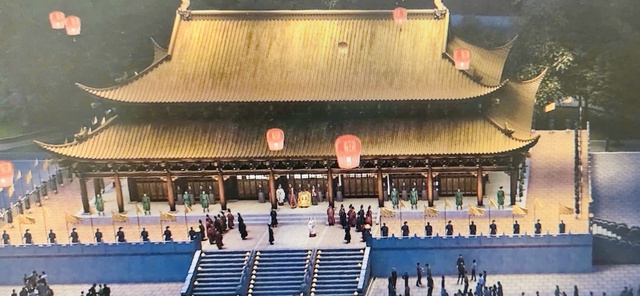
The central axis of the Thang Long Imperial Citadel
The decision was adopted on July 23 during the committee's 48th session in the Republic of Korea.
The committee further welcomed the long-term vision as an important basis for the proposed restoration of Kinh Thien Palace in line with the approved conservation strategy.
Lazare Eloundou Assomo, Director of the UNESCO World Heritage Centre, said the approved dossier was significant not only for Viet Nam but also for the wider international heritage community.
He described it as a model of cooperation between a State Party, UNESCO and its advisory bodies, offering valuable experience for other countries while demonstrating new approaches to heritage conservation and promotion.
Approval of the conservation vision clears the way for continued restoration of the site's central axis, helping revive its historical landscape, strengthen awareness of Viet Nam's cultural heritage and meet the aspirations of both present and future generations.
The Thang Long Imperial Citadel was built in the 11th century by the Ly Viet Dynasty, marking the independence of the Dai Viet.
It was constructed on the remains of a Chinese fortress dating from the 7th century, on drained land reclaimed from the Red River Delta in Ha Noi. It was the center of regional political power for almost 13 centuries without interruption.
The Imperial Citadel buildings and the remains in the 18 Hoang Dieu Archaeological Site reflect a unique South-East Asian culture specific to the lower Red River Valley, at the crossroads between influences coming from China in the north and the ancient Kingdom of Champa in the south.
The site is one of the ten special national heritage sites proclaimed by the Prime Minister in 2009 and was inscribed on the World Heritage List by UNESCO's World Heritage Committee in 2010.
Its UNESCO Outstanding Universal Values are reflected in its historical longevity, its continuous role as a seat of power and its multiple cultural layers./.