Seven key priorities and tasks set for Ha Noi in 2025-2030 period
VGP - Party General and State President To Lam suggested Ha Noi focus on seven key priorities and tasks to drive the Capital's future development.
The Party leader identified the key priorities at the 18th Congress of the Ha Noi Party Committee for the 2025–2030 term.
Ha Noi is entering a new era of development amid both opportunities and challenges as Viet Nam pursues its two centennial goals. Achieving these ambitious objectives requires renewed thinking and bold action from both central and local authorities. The Party Organization, authorities, and people of Ha Noi must fully recognize the Capital's unique role in national development, appreciate the Central Government's strong support, and shoulder their responsibility to meet the expectations of the nation and the city's residents.
To guide Ha Noi into its next phase of development, a comprehensive and integrated vision is needed—one that aligns vision, institutions, urban planning, economic growth, and human development into a unified framework for sustainable progress. On this basis, seven key priorities and tasks are proposed to drive the Capital's future development.
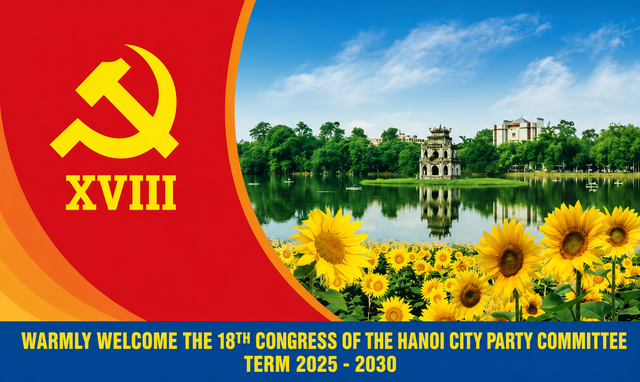
First, build a clean, strong, exemplary, action-oriented, and accountable Party Organization and political system.
This is the first strategic breakthrough and the determining factor for all successes. The Ha Noi Party Organization must truly serve as an outstanding model of political steadfastness, revolutionary ethics, leadership capacity, and combativeness. Every official and Party member must dare to think, dare to act, dare to take responsibility for the common good, match words with deeds, and devote themselves wholeheartedly to serving the people.
The city should continue to rigorously implement the resolutions of the Fourth Plenums of the 12th and 13th Party Central Committees in conjunction with Directive No. 05-CT/TW on studying and following Ho Chi Minh's ideology, morality, and lifestyle.
It is imperative to resolutely prevent and combat corruption, misconduct, and wastefulness; uphold the spirit of self-criticism, solidarity, and unity throughout the Party Organization; and strengthen the close relationship between the Party and the people.
Priority should also be given to improving the effectiveness and efficiency of the two-tier local government model, shifting decisively from a management-oriented mindset to one focused on development facilitation and public service. Decentralization and delegation of authority must be clearly defined, accompanied by accountability and effective oversight.
Above all, Ha Noi must fundamentally transform its mindset with a new spirit: "Once Ha Noi commits, it delivers—swiftly, correctly, effectively, and sees every task through to completion."
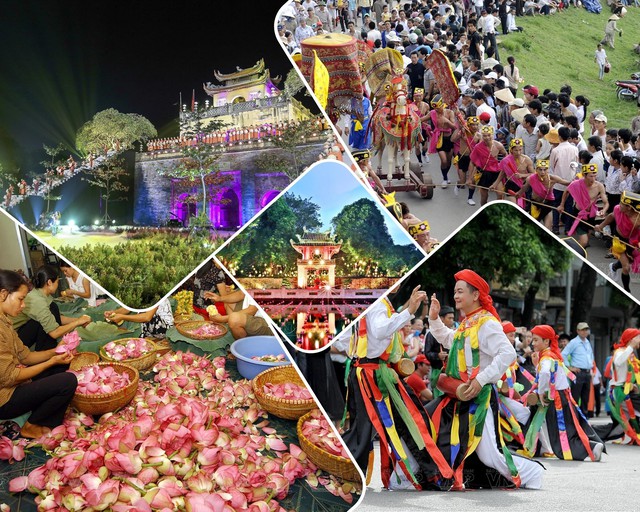
Second, we must place "Civilization – Identity – Creativity" at the heart of every development strategy for the Capital, regarding these values as powerful endogenous resources and the very foundation of Ha Noi's resilience, intellect, and aspirations. They should serve as the basis for the Capital to affirm its role as the nation's leading growth engine, a driver of development, and a source of national inspiration in the new era.
As the Capital, Ha Noi embodies the soul, resilience, and wisdom of the Vietnamese nation. Its strength lies not only in its population size or GDP, but also in the profound cultural depth accumulated throughout history—from the ancient heritage of the Thang Long Imperial Citadel to the vibrant rhythm of a modern city serving as the country's foremost political, cultural, and economic center.
Ha Noi must be shaped into a "City of Civilization, Identity and Creativity," striving to become a "Civilized, Modern and Sustainable Capital" with contemporary vision and global stature. In this vision, civilization represents the city's roots, embodying the nation's intellectual heritage while nurturing confidence, aspirations, and resilience, creating a distinctive appeal unmatched by any other city. Identity serves as Ha Noi's cornerstone and core competitive advantage, enabling it not only to preserve its historical soul but also to foster creativity, develop the knowledge economy, and attract talent. Creativity is the driving force for development, transforming heritage into living value while simultaneously preserving, enriching, and expanding the city's stature in urban planning, architecture, the arts, education, science, and governance.
To realize this vision, development strategies must ensure the integrated advancement of culture, urban space, the economy, and people. Every policy, project, and investment should preserve Ha Noi's traditional character while shaping cultural spaces for future generations and enhancing the city's innovative capacity. The city should develop interconnected "creative corridors" across the Capital, ensuring a continuous flow of creative energy from heritage and knowledge to technology by linking cultural, academic, and innovation hubs.
On that basis, Ha Noi should establish three major innovation poles: Heritage—the historic inner city, the Red River corridor, and the Co Loa Citadel; Knowledge—Viet Nam National University and major education and research centers; and Technology—Hoa Lac Hi-tech Park together with innovation zones. These will serve as the driving axis of the Capital's creativity, maximizing the value of history, knowledge, and technology, and transforming Ha Noi into a city where the past, present, and future converge.
By placing Civilization, Identity and Creativity at the center of every development orientation, Ha Noi will not only reinforce its role as the nation's leading city and a catalyst for national development, but also become a model urban center distinguished by resilience, wisdom, vitality, and sustainability—where the past, present, and future converge into a comprehensive source of strength, laying a solid foundation for the country's development in the new era.
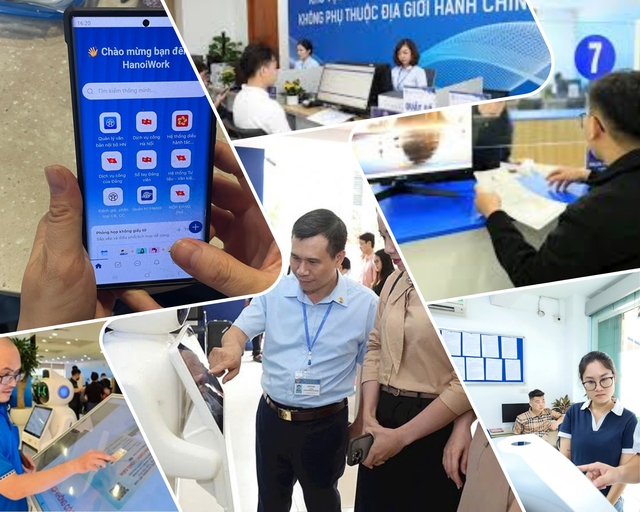
Third, Ha Noi must establish an entirely new governance model, capable of coordinating, leading, and comprehensively addressing pressing challenges while opening up a long-term vision for sustainable development.
As the thousand-year-old Capital, home to nearly ten million people and the country's political center, Ha Noi is confronting urban challenges accumulated over decades of development, including ageing apartment complexes, chronic traffic congestion, persistent air pollution, urban flooding during heavy rainfall, and overstretched inner-city infrastructure. These challenges are not merely infrastructure issues; they constitute a national test of governance capacity and a measure of the Capital's stature and resilience.
I also propose that delegates attending the Party Congress discuss and agree to incorporate into the Action Program for the forthcoming term concrete measures to fundamentally resolve four long-standing issues that the people have eagerly expected to be addressed: traffic congestion; urban order, cleanliness, greenery, civility, and sanitation; environmental pollution, including water and air pollution; and urban flooding in both central and suburban areas.
To overcome these challenges, Ha Noi cannot simply rely on incremental adjustments. Instead, it must establish a fundamentally new governance model—one that shifts from management to development facilitation; from fragmented and overlapping administration to integrated and coordinated governance; and from short-term solutions to sustainable development. Such a model should be worthy of a modern capital, capable of comprehensively addressing urgent challenges while opening up new horizons for development. It should not merely maintain order, but also create momentum for breakthroughs; not only manage the present, but proactively shape the future. We must have the courage to undertake tasks that have never been attempted before, exercise prudence in our methods, and remain resolute in our actions so as to shape the country's development thinking, standards, and models.
This governance model must be advanced, distinctive, integrated, and comprehensive, with all policies, projects, and resources operating in a coordinated manner like the interconnected functions of a single urban organism, under a central coordination system supported by integrated, cross-sectoral data platforms, thereby eliminating fragmentation, overlap, and inconsistencies. Every policy decision must be grounded in science and evidence, thoroughly tested, simulated, and refined before implementation, rather than driven by subjective judgement or narrow sectoral interests.
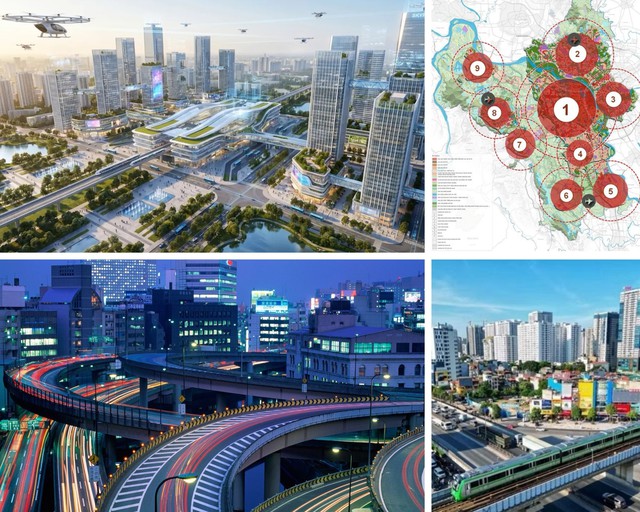
Fourth, refine the multi-polar, multi-center urban development model, transforming each development pole into a genuine growth engine interconnected through backbone infrastructure, strategic corridors, and integrated connectivity networks.
Developing Ha Noi in the new era requires a fundamental shift from the traditional single-center model to a multi-polar, multi-center urban structure. The Capital can no longer concentrate all administrative, economic, educational, healthcare, and cultural functions within the already overloaded historic inner city. Instead, urban space must be reorganized into multiple specialized development poles while ensuring seamless integration and connectivity.
Each urban zone should perform a distinct function within the unified framework of the Capital. The central core, encompassing the Hoan Kiem–Ba Dinh area, should preserve its role as the nation's political and cultural center and guardian of national heritage. The northwestern pole, centered on Hoa Lac Hi-tech Park, should become a hub for high technology, higher education, and scientific research. The southern pole, with its modern industrial parks, should serve as a center for logistics, supporting industries, mechanical engineering, and manufacturing. The eastern pole, home to major gateway ports, should develop into a center for trade and services. Each pole should function as a dynamic growth satellite, possessing its own specialized functions while remaining closely connected with the Capital as a whole and surrounding regions, enabling Ha Noi to become a city that drives regional integration and national development.
Multi-polar development is not merely an expansion of urban space but a strategic design that enlarges the functional capacity of the Capital, allowing each development pole to become a self-sustaining yet organically connected growth center.
At the heart of this model is the principle of "infrastructure-led planning," replacing the conventional approach of "planning for construction." This means that strategies for population distribution, industrial development, commerce, and housing must be designed around actual infrastructure capacity—particularly transport, energy, clean water, drainage, waste treatment, and digital infrastructure—viewing the city as one integrated urban system.
Infrastructure must stay one step ahead of development, with smart and synchronized investment in expressways, metro systems, elevated railways, inland ports, airports, and electricity, water, and telecommunications networks, all interconnected under the concept of "corridors–ring roads–stations."
Urban planning should no longer be regarded as a static blueprint but as a dynamic infrastructure strategy, continuously updated through digital data and monitored using simulation models to ensure that every project is implemented on a sound, transparent, and evidence-based basis.
This is the transformation of planning from geometry to strategy, and from maps to operational capability.
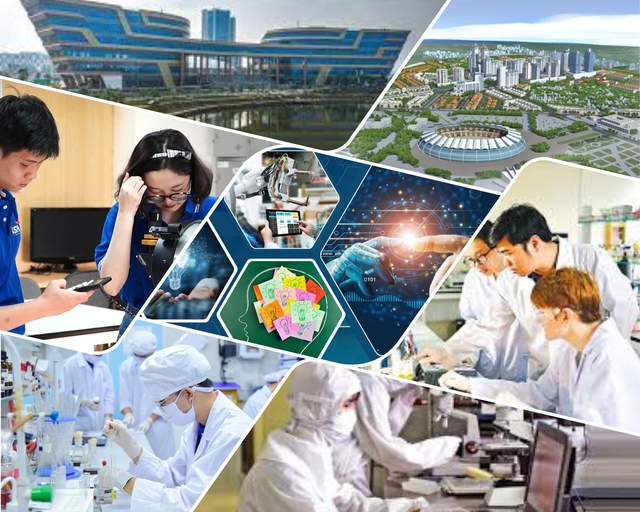
Fifth, develop Ha Noi into a national centre for science, technology, and innovation, serving as the principal engine for regional and national development based on the knowledge economy.
Ha Noi's Gross Regional Domestic Product (GRDP) was estimated at approximately US$58.6 billion in 2024, ranking second nationwide in economic size. During the first nine months of 2025, the city's GRDP grew by 7.92 percent, ranking 17th among the country's 34 localities in terms of growth rate. Although this represented an improvement from 6.65 percent in 2024, the city's growth performance has yet to demonstrate a clear competitive advantage compared with other localities, despite maintaining the country's second-largest economic scale.
The development of science, technology, and innovation will be the decisive factor in accelerating growth in the coming period and the strategic driving force enabling Ha Noi to enter a new stage of development—from an administrative and political capital into the nation's leading center of knowledge, technology, and innovation, spearheading development in the Red River Delta and generating spillover effects across the country. This is not merely an economic and social development requirement but a strategic national choice that reflects a transformation of the growth model based on science, technology, talent, and innovation.
Ha Noi must become the place where new policies are formulated, new technologies are piloted, new talent is cultivated, and new ideas for national development originate. Together with Ho Chi Minh City, Ha Noi possesses the greatest comparative advantages to assume the role of the country's innovation and technology hub. It is home to a highly qualified knowledge workforce and leading universities and research institutions, including Viet Nam National University, Ha Noi; Ha Noi University of Science and Technology; the Posts and Telecommunications Institute of Technology; and the Vietnam Academy of Science and Technology. It is also the country's principal technology and data infrastructure hub, with key facilities such as Hoa Lac Hi-tech Park, national data centers, research centers, and a comprehensive digital infrastructure network. Ha Noi has a rapidly expanding innovation ecosystem, featuring major technology corporations such as Viettel, VNPT, FPT, and MobiFone, alongside thousands of technology start-ups. It also hosts research centres established by global technology companies such as Samsung and Qualcomm, while benefiting from abundant financial resources provided by major financial institutions, including Vietcombank, Techcombank, VPBank, Agribank, BIDV, and VietinBank.
When all these components are effectively connected and operate in a coordinated manner under a dynamic, transparent, strategically oriented governance framework, with the State playing a leading and enabling role, Ha Noi will unlock exceptional synergies. These strengths will not only accelerate technological application and innovation but also enable the Capital to progressively master core and strategic technologies, while taking the lead in developing emerging industries.
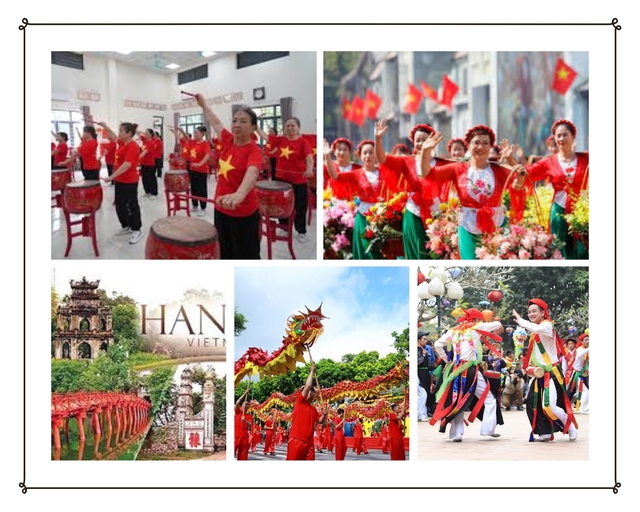
Sixth, place people at the center and regard human well-being as the ultimate measure of development, building a humane, happy, equitable, and civilized Capital that serves as the nation's cultural and intellectual model.
In every development strategy, people must be both the starting point and the ultimate destination. As the nation's center of cultural excellence, where Vietnamese history, culture, and intellect converge, Ha Noi places even greater importance on the role of its people—not only as the driving force behind development but also as the benchmark for evaluating the success of every policy, public work, and long-term vision for the Capital.
Putting people at the center is not merely a humanitarian principle but also a fundamental operating principle of a modern, smart, and sustainable city. Every policy, planning initiative, technological solution, and infrastructure project must ultimately serve to enhance people's capabilities and quality of life. Ha Noi should become a city where every citizen has opportunities to learn, innovate, start businesses, and contribute to society, while enjoying a comprehensive social welfare system that guarantees healthcare, education, social security, housing, employment, and access to cultural and artistic spaces. Only when people are able to develop comprehensively can society become truly equitable, innovative, and prosperous.
Human development must remain the central objective of the Capital's development strategy. This includes not only improving people's capabilities, dignity, and quality of life, but also fostering civic ethics and a refined culture of conduct. Ha Noi should continue to uphold the values of elegance, compassion, and responsibility in modern urban life while building a professional, transparent, and people-centered public administration in which every action of public officials and government agencies reflects accountability and close ties with the people.
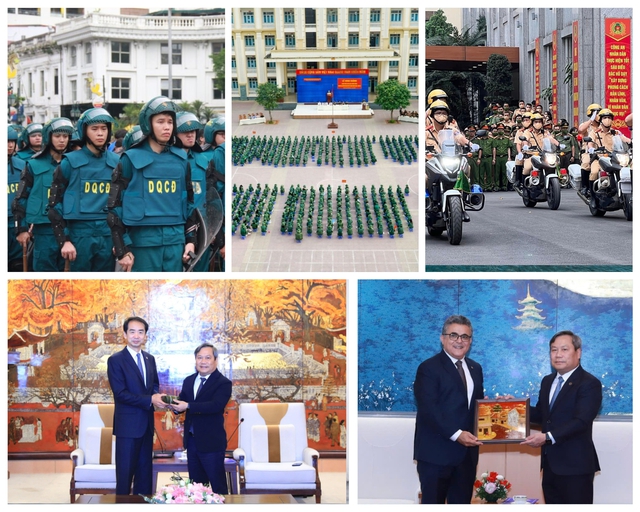
Seventh, firmly safeguard national defense and security while expanding external relations, regional cooperation, and international integration.
Ha Noi must always remain a stronghold of political stability, national security, and social order. The city should proactively monitor developments from an early stage and from afar, effectively prevent and combat crime—particularly high-tech and organized crime—and strengthen its capacity for disaster prevention, search and rescue, and climate change adaptation. The sense of safety and peace experienced by residents and visitors alike should serve as the ultimate measure of the Capital's security and stability.
At the same time, Ha Noi should further promote foreign relations, international integration, and regional cooperation by expanding partnerships with major cities around the world and actively participating in global networks of green, smart, and innovative cities. Through these efforts, Ha Noi will further enhance its standing as Viet Nam's foremost political, cultural, educational, and economic center on the international stage./.