
Resolution 10: Ha Noi leverages human resource to attract FDI
VGP - Ha Noi has identified the development of high-quality human capital as a strategic priority to lay the foundation for attracting high-tech FDI projects, research and development (R&D), and digital transformation.
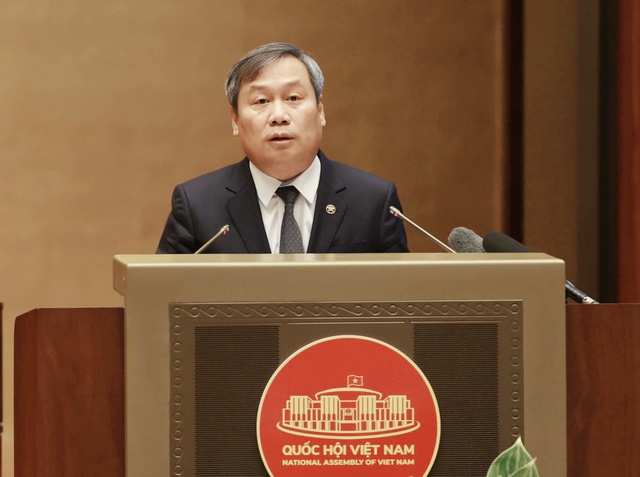
Deputy Secretary of the Ha Noi Party Committee, and Chairman of the city People's Committee Vu Dai Thang addresses the teleconference on the implementation of the Resolution No. 10-NQ/TW, Ha Noi, June 29, 2026 - Photo: VGP
Deputy Secretary of the Ha Noi Party Committee, and Chairman of the city People's Committee Vu Dai Thang made that above statement in his remarks delivered at the teleconference on the implementation of the Resolution No. 10-NQ/TW.
According to the Chairman, Resolution 10 was issued at a time when global foreign investment flows are rapidly shifting toward high technology, research and development, innovation, digital transformation, green transition, and strategic industries.
In this context, the quality of human resources, research capabilities, and the innovation ecosystem have become increasingly decisive factors for multinational corporations when selecting investment destinations.
Resolution 10 reflects a new stage in the Party's strategic thinking on the foreign-invested sector, shifting from the objective of simply attracting capital to selectively attracting investment based on quality, technology, innovation, modern governance, and spillover effects.
For Ha Noi, implementing the Resolution carries particular significance, as the capital serves not only as Viet Nam's political and administrative center but also as a major hub for education, training, science and technology, innovation, and digital transformation.
The city views the development of high-quality human resources as serving not only Ha Noi's own development needs but also as providing a knowledge and talent base for the Capital Region and the country as a whole.
Innovation ecosystem – Ha Noi's competitive advantage
The Chairman said, Ha Noi's strength lies not only in its market size or rapidly expanding infrastructure, but also in its ability to integrate all components of a complete innovation ecosystem—from talent development, scientific research, and technology testing to enterprise development and the commercialization of research outcomes.
In recent years, the city has proactively implemented a number of major central policies, particularly Politburo Resolution No. 57-NQ/TW, the Capital Law, and the strategic orientations set out in the Ha Noi Capital Master Plan.
The capital city has focused on improving institutional mechanisms, enhancing the investment climate, accelerating digital transformation, promoting innovation, and gradually developing new spaces for science and technology, high-tech industries, and the digital economy.
Notably, the conference on the announcement of the Ha Noi Capital Master Plan with a 100-year vision and the 2026 Investment Promotion Conference, held on June 29, demonstrated strong interest from both domestic and international business communities. The participation of leading technology companies such as NVIDIA, Samsung, FPT, CMC, and many other partners highlighted Ha Noi's growing potential to attract high-quality investment flows.
However, discussions with investors revealed that their foremost concern extends beyond infrastructure and investment incentives. Equally important are access to a highly skilled workforce, a robust research and development environment, and strong linkages with universities and research institutes.
At the same time, the gap between educational outcomes and the actual needs of businesses—particularly FDI enterprises operating in high-tech sectors—remains a challenge that requires continued attention.
Training talent for future economy
Based on these realities, Ha Noi has identified the development of high-quality human resources as a core competitive advantage in attracting next-generation FDI.
The city will strengthen mechanisms for commissioning science and technology tasks, assigning major projects to leading research teams, and creating favorable conditions for scientists and experts to address key development challenges facing the capital.
Ha Noi's approach is not only to attract talent but also to provide an environment in which they can conduct research, innovate, engage in international cooperation, and pursue long-term careers.
A key priority is to reform education and training to better align with the practical needs of businesses and the labor market. The city will further promote collaboration among government agencies, educational institutions, research institutes, and enterprises, shifting from supply-driven education toward demand-driven training that meets the needs of emerging technology industries.
The city also encourages FDI enterprises, technology firms, and major corporations to participate in curriculum development, commission training programs, provide internship opportunities, offer reskilling programs, and recruit graduates. This is considered a critical solution for narrowing the gap between education and employment while improving workforce quality to meet the demands of the digital economy.
Building hub for talent and innovation
Alongside human capital development, Ha Noi will focus on building an open-network ecosystem for research, development, and innovation, creating a strong foundation for attracting R&D centers and high-tech FDI projects.
The city will leverage the special mechanisms provided under the Capital Law, Politburo Resolution No. 02-NQ/TW, and the Ha Noi Capital Master Plan to establish a collaborative network linking universities, research institutes, technology enterprises, and innovation centers. At the same time, it will invest in key laboratories, data centers, digital infrastructure, and advanced technology testing facilities.
Besides, the capital city will continue implementing digital skills development programs for workers, enhance capabilities in data utilization, artificial intelligence, cybersecurity, and digital governance across both the public and private sectors. The city will also accelerate the application of digital technologies in education, training, and human resource management, enabling lifelong learning and helping the workforce adapt quickly to the evolving requirements of the digital economy.
Ha Noi's objective is to create an environment where universities, research institutes, businesses, experts, and investors can collaborate, innovate, and grow sustainably, thereby creating new growth poles driven by knowledge, technology, and innovation.
Affirming the city's determination, Vu emphasized that in the new era of development, high-quality human resources constitute the most important "soft infrastructure" for every nation and locality.
Ha Noi will continue to take the lead in effectively implementing Politburo Resolutions No. 10-NQ/TW and No. 57-NQ/TW, with the goal of developing the capital into Viet Nam's leading hub for talent, research and development, and innovation, while contributing to the country's ambition of becoming a premier destination for high-quality investment and strategic industries in the new stage of development./.