
Ha Noi to upgrade dyke system in response to climate change
VGP - Ha Noi is facing mounting pressure to ensure the safety of its dyke system as climate change intensifies and urbanization continues at a rapid pace.
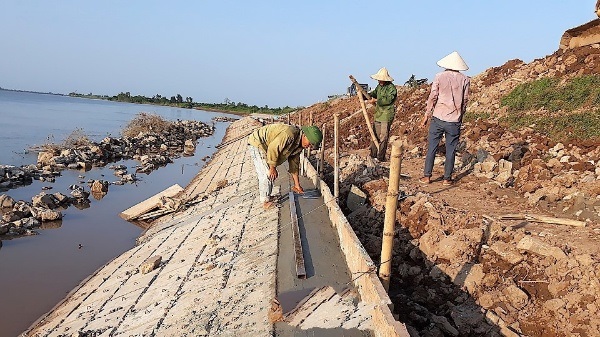
Ha Noi to upgrade dyke system in response to climate change - Illustration photo
According to the city's Department of Agriculture and Environment, although the existing dyke system has played a crucial role in protecting the city during many historic floods, a number of sections have become outdated and no longer meet current requirements for disaster prevention and modern transport infrastructure development.
Statistics from the department showed that the capital city currently has 626.513 kilometers of classified dykes under management, along with 43 ring dykes, secondary dykes, and specialized dykes totaling more than 144 kilometers that have yet to be officially classified.
As large floods occurred in both 2024 and 2025, new flood level set records on several rivers, causing widespread overtopping of dykes and substantially increasing the risk to flood-control infrastructure.
Deputy Director of the Ha Noi Department of Agriculture and Environment Nguyen Dinh Hoa said, the department has submitted a comprehensive plan to the city for upgrading the dyke system.
The plan aims not only to strengthen disaster prevention and flood control but also to modernize the dyke system as a multifunctional infrastructure network that integrates transportation, urban renewal, riverfront landscaping, and socio-economic development, he shared.
Nguyen emphasized that the guiding principle of the plan is to "place flood safety above all else."
At the same time, the city will maximize the width of dyke cross-sections, ensure a minimum of two traffic lanes, standardize load capacities, and integrate the dyke network with surrounding transportation infrastructure. Dyke sections passing through urban areas will undergo landscape improvements, while those in suburban districts will be upgraded to standards that ensure both flood safety and efficient transportation and operational management.
In addition to reinforcing dyke foundations, embankments, and slopes, the city will address long-standing vulnerable points, including seepage, slope failures, and sand boils. Investments will also be made to upgrade revetments, sluice gates through dykes, and other supporting infrastructure.
Regarding funding, the department stated that Ha Noi plans to allocate approximately VND 1.968 trillion (US$75 million) in 2026 to implement urgent projects, while carrying out works initiated during the 2021–2025 period with a total investment exceeding VND 3.476 trillion (US$132 million).
Funding requirements for the 2026–2030 period are estimated at approximately VND 16.303 trillion (US$620 million), with an additional VND 13.187 trillion (US$501.4 million) projected for projects beyond 2030. These figures demonstrate that the city is pursuing a comprehensive, phased approach to upgrading its dyke system with clearly defined priorities.
Such upgrades are essential to address the increasingly severe impacts of climate change while supporting the city's urban, economic, and social development in the years ahead./.