Ha Noi to unlock the full potential of next-generation FDI
VGP - Ha Noi is entering a new growth cycle in attracting high-quality foreign direct investment (FDI), with a strong focus on fostering innovation, promoting sustainable development, and selecting strategic investors.
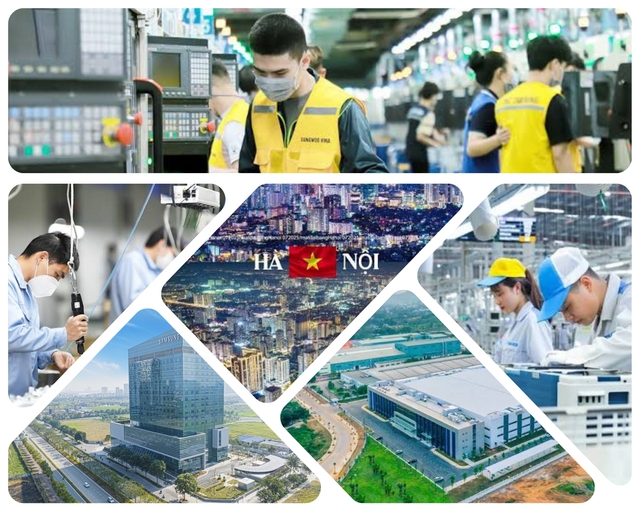
he city has set a target of attracting US$25 billion in FDI during the 2026–2030 period
Positive outlook driven by multiple factors
During the first six months of 2026, Ha Noi remained an attractive destination for foreign investment, attracting more than US$3.23 billion in FDI and surpassing its annual target. Notably, 72 percent of the inflows were directed toward science, technology and innovation, reflecting the capital's growing appeal to high-quality investment projects.
The strong inflow of FDI demonstrates investors' confidence in Ha Noi at a time when competition among localities to attract foreign capital is becoming increasingly intense.
That confidence is underpinned by a range of fundamental advantages. Ha Noi has maintained robust economic momentum, with gross regional domestic product (GRDP) expanding by more than 8 percent in the first half of the year, higher than the same period last year. Public investment has continued to play a leading role in driving infrastructure development and mobilizing additional social resources.
The city is accelerating the implementation of special mechanisms and policies under the 2026 Capital Law while rolling out its 100-year Capital Master Plan. Together with the development of smart urban areas, these initiatives are expected to provide a solid foundation for large-scale research and development (R&D) projects.
To develop a highly skilled workforce, Ha Noi earmarked substantial budget resources for scientific research and digital transformation. In 2026, the capital became the first locality in Viet Nam to allocate around 4 percent of its total annual budget expenditure—equivalent to VND9 trillion (approximately US$345 million)—to science and technology, innovation and digital transformation.
Taken together, these factors indicate that Ha Noi's FDI attraction is entering a new phase. The city has set a target of attracting US$25 billion in FDI during the 2026–2030 period, more than double the amount recorded in the previous five-year period.
Priority will be given to strategic investors and leading technology corporations capable of helping build semiconductor, chip design and data center ecosystems. Future FDI inflows will be directed toward strategic infrastructure, urban development, transport, high-tech industries, logistics, environmental protection, healthcare, education and new development spaces. Success will no longer be measured by the number of projects, but by the technologies transferred and the value they generate.
"This target is intended to support Ha Noi's goal of achieving annual GRDP growth of more than 11 percent. We need a new generation of FDI to transform the digital economy, artificial intelligence (AI) and semiconductors into new growth drivers. Ha Noi is no longer prioritizing investment quantity alone but is shifting decisively toward quality, with technological capability and the ability to forge linkages with domestic enterprises serving as key selection criteria," said Deputy Director of the Ha Noi Department of Finance Le Trung Hieu.
Building an ecosystem to retain major investors
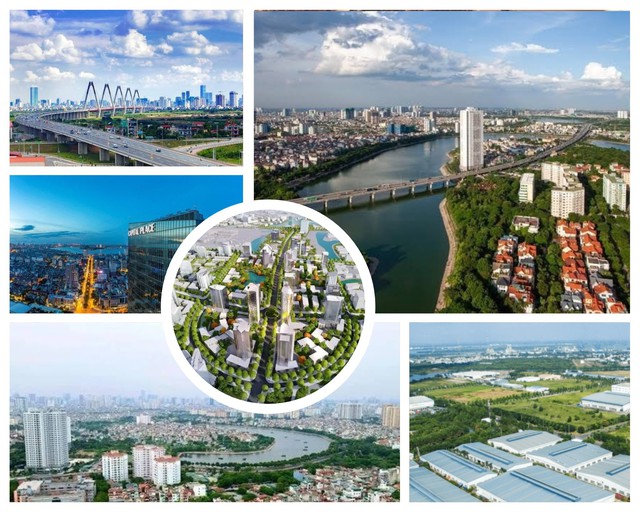
Investment in green industrial real estate has become an increasingly notable trend in Ha Noi. Major industrial parks such as Sai Dong A, Noi Bai and Thang Long are attracting growing interest from international investors. These parks are equipped with energy-efficient facilities, waste reduction systems and environmentally friendly factories, helping create greener and more sustainable production environments.
A notable example is the cooperation between Viet Nam's N&G Group and South Korea's SEIN I&D to develop the Viet Nam–Korea Techno Park Complex. Such projects not only generate economic benefits for investors but also contribute to the capital's sustainable development in line with global green growth trends.
The Ha Noi administration reaffirmed its commitment to providing maximum support for FDI enterprises while pursuing a selective investment attraction strategy aligned with sustainable development and the city's vision of becoming a "Green – Civilized – Smart – Modern" capital.
Chief Representative of the Japan External Trade Organization (JETRO) Office in Ha Noi Ozasa Haruhiko expressed confidence that Ha Noi, in its new stage of development, will become an effective hub connecting domestic and foreign enterprises while continuing to improve its investment climate to attract more high-quality projects.
Experts and investors believe the city still has considerable room to attract green investment projects and strategic technologies associated with advanced technology transfer. However, opportunities are accompanied by significant challenges.
To maintain its competitive edge, Ha Noi must continue institutional reforms and effectively address structural bottlenecks in the economy.
The city is no longer focusing solely on attracting new investment projects but is shifting toward a strategy of retaining investors through stronger institutions, better infrastructure and a highly skilled workforce. This orientation was reaffirmed by city leaders at a conference launching the action plan to implement Resolution No. 10-NQ/TW.
According to Nguyen Xuan Luu, Vice Chairman of the Ha Noi People's Committee, the city's new objective is to attract strategic investors with strong technological, managerial and financial capacity, thereby creating positive spillover effects across domestic supply chains.
The Ha Noi administration pledged to further improve the business environment through institutional reforms, streamlined administrative procedures and the development of a comprehensive investment ecosystem, including modern infrastructure, a high-quality workforce and stronger domestic enterprises capable of participating more deeply in global supply chains.
The city has also proposed that the central government continue introducing preferential policies for strategic sectors such as digital technology, semiconductors and data centers. At the same time, Ha Noi will strengthen post-licensing support and supervision, not only to attract new investors but also to retain existing ones and encourage them to expand production.
With its integrated planning, special policy mechanisms and strong commitment to reform, Ha Noi is well positioned to transform itself from a market with strong investment appeal into a premier destination for strategic global capital./.