Ha Noi to build over 140 national-standard schools as enrollment surges by 60,000
VGP - Ha Noi expects to build 141 public schools meeting national standards in 2024, surpassing its initial target of 114, according to the city’s Department of Education and Training (DoET).
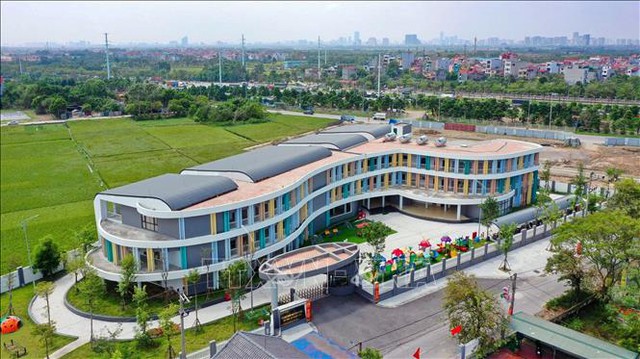
Ha Noi expects to build 141 public schools
The new tally includes 55 kindergartens, 52 primary schools, 29 lower secondary schools, and five high schools, marking one of the city's strongest annual expansions in recent years.
Under Viet Nam's national school standards, educational institutions must meet stringent criteria related to infrastructure, including spacious playgrounds, multi-purpose sports areas, disaster-resilient buildings, and anti-glare lighting systems in classrooms.
The city faces mounting pressure as its student population continues to rise. For the 2025–2026 academic year, Ha Noi recorded more than 2.3 million students, an increase of roughly 60,000 from the previous school year.
To prepare for the surge, Ha Noi built 43 new public and private schools by mid-August. Of these, 27 are public—including 10 kindergartens, nine primary schools, five secondary schools, and three high schools—while 16 are private.
With the additions, Ha Noi now has 2,954 public and private schools and around 70,500 classes, including 2,337 public schools. The capital also maintains 29 continuing education and vocational centers, serving nearly 29,000 learners.
Despite overall growth, Ha Noi continues to face a serious shortage of high school capacity. The city currently has only about 200 public and private high schools, with public schools accounting for just 58 percent, far below the demand of families seeking affordable education.
To address the shortage, the city has recently opened three new public high schools: Đỗ Mười High School (formerly in Hoang Mai District), Phuc Thinh High School (formerly in Dong Anh District), and a new high school at plot A11 Trung Hoa (formerly in Cau Giay District).
District and town authorities have been tasked with prioritizing land and financial resources to expand the network of national-standard schools. The city emphasizes that building high-quality educational institutions is essential to reducing overcrowding, improving student outcomes, and meeting Ha Noi's long-term development goals.
As enrollment continues to climb by tens of thousands each year, Ha Noi faces a race to expand its school infrastructure fast enough to ensure every child has access to safe, spacious, and equitable learning environments.
Ha Noi strengthens education system to become a leading learning city
Ha Noi is strengthening its role as one of Vietnam's leading education hubs through a comprehensive approach that spans early childhood to higher education, digital learning, and lifelong learning. The city is expanding its large school network, investing in preschools, high-quality public schools, and international schools, while upgrading infrastructure and teaching facilities.
To improve quality, Ha Noi is modernizing curricula, enhancing teacher training, promoting STEM/STEAM, and boosting English proficiency. Many schools are adopting e-learning systems, smart classrooms, and AI-supported teaching.
As a center for higher education, the city hosts top national universities that drive research, technology, and workforce development. Digital transformation is a major priority, with initiatives such as online learning platforms, digital textbooks, AI-based assessment, and citywide digital literacy programs.
Ha Noi also promotes lifelong learning through community learning centers, cultural programs, and vocational training, contributing to striving for recognition as a member of UNESCO's Global Network of Learning Cities.
The city continues to prioritize equity by supporting disadvantaged students, improving inclusive education, and upgrading schools in suburban areas. Overall, Ha Noi is building a modern, inclusive, and future-ready education system that supports innovation and sustainable development./.