
Ha Noi seeks greater decentralization, stronger grassroots governance
VGP - Secretary of the Ha Noi Party Committee Tran Duc Thang said the capital comprehensively reorganized its administrative structure over the past year to reflect its status as a special city with a large population, an extensive Party organization network and heavy administrative workloads.
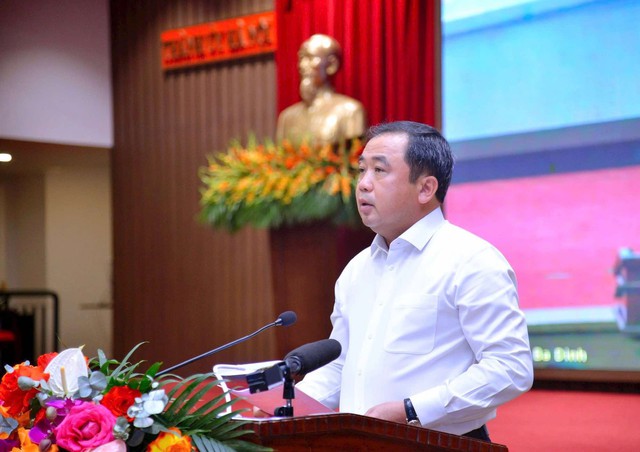
Secretary of the Ha Noi Party Committee Tran Duc Thang
The city simultaneously adjusted administrative boundaries, streamlined the political system, strengthened decentralization and delegation of authority, retrained civil servants based on job positions, and accelerated digital transformation to build a modern governance system.
According to Tran, the first year of implementation has demonstrated that the new organizational model is the right approach, delivering tangible improvements in governance and socio-economic development.
Greater decentralization has enabled Ha Noi to make more proactive decisions on major issues, including implementing the Capital Law, drafting its master plan with a 100-year vision, resolving prolonged site clearance bottlenecks and launching large-scale investment projects.
Administrative reforms have also improved the business environment and promoted socio-economic development.
In 2025, Ha Noi recorded its highest gross regional domestic product (GRDP) growth in many years. State budget revenue reached an estimated VND410 trillion (nearly US$15.6 billion) in the first half of 2026, equivalent to 63.2 percent of the annual target, while public investment disbursement stood at 44.04 percent.
Public service delivery has improved significantly. The overdue settlement rate for administrative dossiers fell from 44.63 percent in 2025 to just 4.2 percent in the first six months of 2026. Ha Noi ranked fifth among Viet Nam's 34 provinces and cities in governance and administrative reform, and eighth in citizen satisfaction. Real-time surveys recorded a public satisfaction rate of 98.95 percent.
Drawing on Ha Noi's experience, Tran proposed reviewing commune-level administrative units based on their specific characteristics, including urban, suburban and rural conditions, population size and development potential, in order to establish more suitable organizational structures. He also suggested developing strategically important administrative units serving as regional growth hubs, with selected communes and wards acting as core centers to drive development and generate wider spillover effects.
He called for further decentralization to commune-level authorities in line with resource allocation, continued streamlining of organizational structures to eliminate unnecessary intermediary layers, further refining the Party organization model to align with the state administrative system, greater autonomy for public non-business units, and broader participation of businesses and social organizations in delivering appropriate public services.
Tran also stressed the need to strengthen the capacity of grassroots personnel, attract more talent, encourage innovation and accountability among civil servants, and tighten discipline to prevent delays and bureaucratic practices.
At the national level, he urged ministries and sectors to accelerate the development of shared data platforms and complete integrated databases covering land, planning, healthcare, education and culture, alongside a unified management system aligned with the Government's common architecture and data standards.
He added that Ha Noi has already adopted a plan to promptly address issues within its authority, with the goal of resolving most bottlenecks by the end of 2026./.